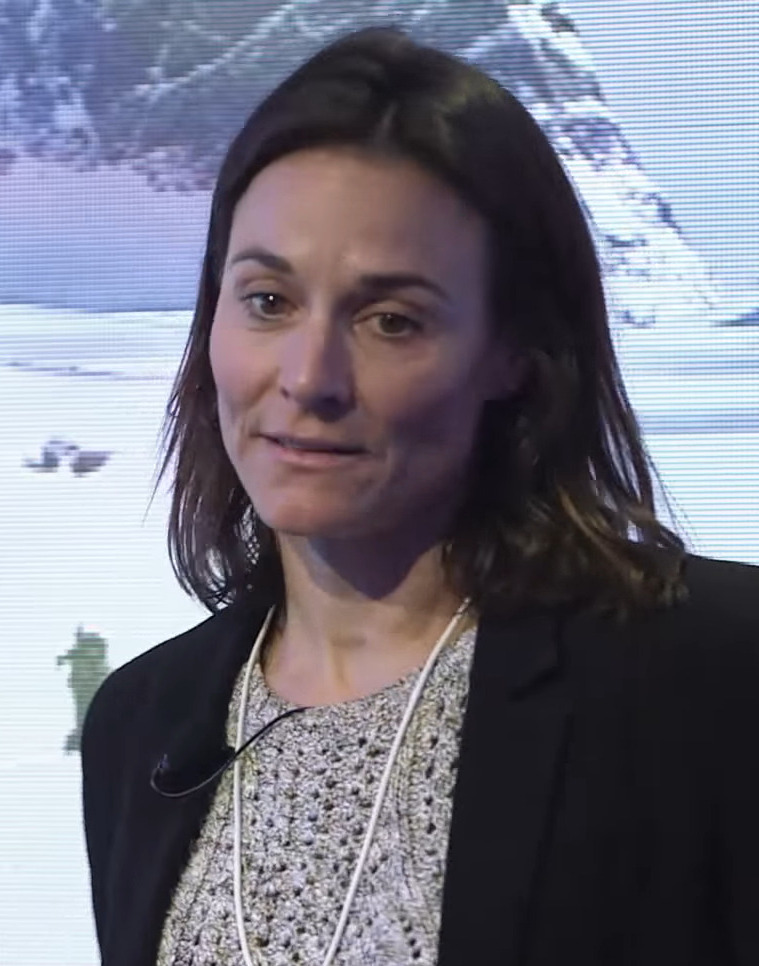
The world of extreme sports is often defined by those who push the boundaries of human endurance, skill, and courage. Hilaree Nelson was one such individual, a name synonymous with pioneering feats in ski mountaineering. Her life was a testament to passion, grit, and an unwavering commitment to exploring the planet's most formidable peaks. Yet, even for an athlete of her caliber, the high mountains hold inherent, often unforgiving, dangers. On September 26, 2022, the mountaineering community was plunged into mourning with the news of her tragic passing on Manaslu, the world’s eighth-highest peak. This article delves into the remarkable life and poignant end of Hilaree Nelson, an icon whose legacy continues to inspire, even as her death serves as a stark reminder of the risks faced by skieuses randonnée mortes and all who venture into the alpine wilderness.
Hilaree Nelson: A Pioneer's Unparalleled Ascent in Ski Mountaineering
Born in Seattle on December 13, 1972, Hilaree Nelson's destiny with the mountains seemed almost preordained. Her journey into the world of ski mountaineering began early, with a significant chapter unfolding in the heart of the European Alps. In the 1990s, she made her home in France, settling at the foot of the majestic Mont Blanc, a natural training ground for an aspiring alpinist. It was here, amidst the rugged beauty of the Chamonix valley, that she honed her formidable skills. By 1996, her talent and daring were recognized globally when she was crowned the European Extreme Ski Champion, signaling her arrival as a force to be reckoned with in the sport.
From that point, Nelson embarked on a relentless series of ski-alpinism expeditions across the globe, tackling some of the most challenging terrain imaginable. Her career was punctuated by groundbreaking achievements that redefined what was possible for women in high-altitude mountaineering. Perhaps her most celebrated feat occurred on May 25, 2012, when she etched her name into the annals of history as the first woman to summit two 8,000-meter peaks—Mount Everest and Lhotse—within a staggering 24-hour window. This incredible display of endurance, skill, and strategic planning showcased her exceptional abilities and set a new benchmark for alpine athleticism. For a deeper dive into her unparalleled achievements, explore Hilaree Nelson's Legacy: Everest, Lhotse, and Extreme Ski Firsts.
But Nelson wasn't content with just reaching summits; she wanted to ski down them. On September 30, 2018, alongside her trusted partner Jim Morrison, she achieved another historic first: the inaugural ski descent of the "Dream Line" – the Lhotse Couloir from the summit. Lhotse, the world's fourth-highest mountain and a close neighbor to Everest, presented an extreme challenge. Their audacious descent was not only a personal triumph but also immortalized in the acclaimed film "Lhotse" by Dutch Simpson and Nick Kalisz, bringing the raw beauty and danger of their endeavor to a wider audience.
Her contributions and trailblazing spirit did not go unnoticed. Nelson was deservedly recognized by prestigious publications, being named one of the "25 Most Adventurous Women of the Last 25 Years" by Men's Journal and earning the title of National Geographic Adventurer of the Year in 2018. These accolades underscored her immense impact, not just as an athlete, but as an inspiration for women worldwide to pursue their own adventurous dreams.
The Lure and Lethality of the High Mountains
The very allure of ski mountaineering lies in its blend of breathtaking beauty and formidable risk. Athletes like Hilaree Nelson are drawn to the untouched vastness, the silent majesty of snow-covered peaks, and the unparalleled thrill of carving turns where no one has before. However, these environments are inherently dangerous, unforgiving landscapes where conditions can shift in an instant. The thin air, extreme cold, unpredictable weather, avalanches, crevasses, rockfall, and the immense physical toll on the human body all contribute to a cocktail of hazards that demand absolute respect and meticulous preparation.
For skieuses randonnée mortes (female ski mountaineers who have died) and their male counterparts, every expedition is a calculated gamble. Despite years of experience, advanced equipment, and rigorous training, the mountains retain the final say. The margins for error are minuscule, and a single misstep, a sudden change in snowpack, or an unforeseen meteorological event can have catastrophic consequences. The drive to explore, to push human limits, often comes with an unspoken understanding of these profound risks. It is a testament to the passion of these adventurers that they continue to face such challenges, driven by a profound connection to the wilderness and an insatiable desire for discovery.
Understanding the Risks: More Than Just Falling
- Altitude Sickness: At extreme altitudes, the body struggles to adapt, leading to conditions like High Altitude Pulmonary Edema (HAPE) or High Altitude Cerebral Edema (HACE), which can be fatal.
- Avalanches: One of the most significant and unpredictable dangers in ski mountaineering. Even experienced skiers can be caught unaware by unstable snowpacks.
- Crevasses and Icefalls: Hidden dangers beneath the snow, often requiring intricate rope work and careful navigation.
- Extreme Weather: Sudden storms, whiteouts, and drastic temperature drops can lead to disorientation, frostbite, and hypothermia.
- Technical Terrain: Steep slopes, ice, and rock require expert climbing and skiing skills, and equipment failure or human error can be deadly.
- Fatigue and Decision-Making: Prolonged exposure to extreme conditions can impair judgment, increasing the likelihood of accidents.
The Manaslu Tragedy: A Somber Reminder
It was on the slopes of Manaslu, the world's eighth-highest peak at 8,163 meters (26,781 ft), that Hilaree Nelson’s incredible journey tragically concluded. On September 26, 2022, after successfully reaching the summit, an achievement in itself, Nelson was descending the mountain on skis. The exact circumstances leading to her fall remain a stark reminder of the unforgiving nature of the high Himalayas. Reports indicated she fell into a crevasse while skiing down from the true summit, a sudden and devastating accident that silenced a vibrant spirit.
The global mountaineering community held its breath during the search and rescue efforts. Sadly, two days later, her body was recovered, a somber confirmation of the loss. Her remains were subsequently transported to Kathmandu, bringing a tragic end to an extraordinary life dedicated to the mountains. Her death sent shockwaves through the adventure world, underscoring the universal truth that even the most accomplished and prepared individuals are not immune to the inherent perils of these environments. It served as a painful reminder of the sacrifices made by many, including the brave skieuses randonnée mortes who have paved the way for future generations of adventurers.
Beyond the Loss: Hilaree Nelson's Enduring Legacy and Mountain Safety
Hilaree Nelson's passing leaves an irreplaceable void, but her legacy undoubtedly endures. She wasn't just an athlete; she was a storyteller, a mentor, and a powerful advocate for exploration and environmental stewardship. Her life demonstrated that seemingly impossible goals could be achieved through courage, perseverance, and meticulous preparation. Her pioneering spirit, particularly in breaking barriers for women in extreme sports, continues to inspire a new generation of adventurers to follow in her footsteps, challenging perceptions of what women are capable of in the most demanding environments.
However, her death also serves as a critical call for reflection on mountain safety and responsible adventuring. While the allure of the peaks is undeniable, it is paramount to approach them with respect, humility, and an unwavering commitment to safety protocols. To truly honor Hilaree Nelson's memory, we must also embrace the lessons learned from her life and the poignant circumstances of her end.
Essential Tips for Mountain Safety and Responsible Adventuring:
- Thorough Planning and Preparation: Research the route, conditions, and potential hazards extensively. Train physically and mentally for the specific demands of your expedition.
- Never Go Alone: Always travel with a trusted partner or group, and ensure someone at home knows your itinerary.
- Proper Equipment: Use high-quality, well-maintained gear appropriate for the conditions, including avalanche safety equipment (transceiver, shovel, probe) for ski mountaineering.
- Skill Development: Continuously improve your technical skills (skiing, climbing, rope work) and wilderness first aid knowledge.
- Weather Monitoring: Pay close attention to forecasts and be prepared to turn back if conditions deteriorate. Mountains can be unpredictable.
- Acknowledge Limitations: Be honest about your skill level and physical condition. Pushing beyond your limits significantly increases risk.
- Emergency Communication: Carry satellite phones, GPS devices, and personal locator beacons (PLBs) for communication in remote areas.
- Respect the Mountain: Understand that you are a visitor in a powerful, untamed environment. Humility and caution are your best companions.
Hilaree Nelson's journey was a vibrant tapestry of audacious climbs, exhilarating descents, and groundbreaking achievements. Her story is a powerful narrative of passion, dedication, and the relentless pursuit of dreams in the world’s highest, most challenging environments. While her tragic end on Manaslu left a profound sadness, it does not overshadow the brilliance of her life. Instead, it underscores the inherent risks that accompany such endeavors, a reality faced by all who dare to challenge the peaks, and a somber truth that has led to many courageous skieuses randonnée mortes making the ultimate sacrifice. Hilaree Nelson will forever be remembered as a visionary ski mountaineer, an inspiring leader, and a true icon whose spirit continues to soar among the mountains she so deeply loved.